₸USD$0.053982·PEGNONE, BY DESIGN·MCAP$386K·Stables flipped—·Burned1.06B ₸·Bought back2.08B ₸·Staked29.02B ₸·Wallets246,830·Memes—·AMI managed$10.6K·Last AMI opBURNENGINE 8.81M ₸USD ·Printerbrrr·USD printed+$40,076/sec·M2 YoY+5.7%·Stabilitynever heard of her·Bailouts0·Roadmapup·₸USD$0.053982·PEGNONE, BY DESIGN·MCAP$386K·Stables flipped—·Burned1.06B ₸·Bought back2.08B ₸·Staked29.02B ₸·Wallets246,830·Memes—·AMI managed$10.6K·Last AMI opBURNENGINE 8.81M ₸USD ·Printerbrrr·USD printed+$40,076/sec·M2 YoY+5.7%·Stabilitynever heard of her·Bailouts0·Roadmapup·₸USD$0.053982·PEGNONE, BY DESIGN·MCAP$386K·Stables flipped—·Burned1.06B ₸·Bought back2.08B ₸·Staked29.02B ₸·Wallets246,830·Memes—·AMI managed$10.6K·Last AMI opBURNENGINE 8.81M ₸USD ·Printerbrrr·USD printed+$40,076/sec·M2 YoY+5.7%·Stabilitynever heard of her·Bailouts0·Roadmapup·
Fiat 101 · Lesson 7 of 8
The Cantillon effect: who gets the new money first
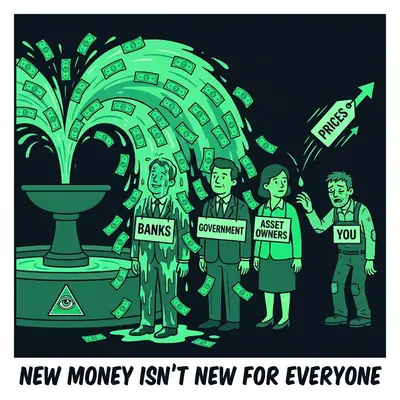
New money does not reach everyone at once. Those closest to the printer spend it before prices rise.
Richard Cantillon, an 18th-century economist, noticed that new money changes prices step by step. Whoever receives it first, banks, governments and asset holders, spends it at the old prices.
By the time it reaches wages and savings, prices have already risen. The same printing makes some richer and others poorer.