
₸USD / TurboPaper / September 2026
Download PDFTurboUSD Unstablecoin
It looks like a dollar. It appreciates like a hard asset.
The TurboUSD whitepaper: ₸USD, the first unstablecoin. A supply that only shrinks, priced against ETH, tokenized stocks and metals through the Anchor, with a treasury run by AMI, an Artificial Monetary Intelligence, and an ecosystem of products that create demand for it.
- Asset
- ₸USD
- Network
- Base
- Max supply
- 100B, only shrinking
- Edition
- 2nd · Sep 2026
00. Abstract
₸USD looks like a dollar and appreciates like a hard asset. It is the first unstablecoin: an onchain currency with no peg, no issuer and no printer, deployed on 12 October 2024 as a direct answer to the rise of stablecoins.
Its maximum supply of 100 billion can never grow and has only moved one way: down. Every trade pays a fee that is turned into burned ₸USD. An Artificial Monetary Intelligence, AMI, runs the treasury inside hard limits written in a smart contract, and uses it to buy ₸USD back and take it out of circulation for good. Since September 2026, ₸USD is also quoted through the Anchor, a pool that prices it against ETH, tokenized stocks and tokenized metals: the assets that get more expensive the more dollars are printed. Around it, an ecosystem of products, from MemeStock.market to an energy drink, gives people reasons to hold and use ₸USD.
This paper explains the problem ₸USD answers, how its supply and pricing work, who operates the treasury and under which rules, the projects that create demand for it, and the risks. Terms are defined in the A–Z Terminology at the end.
01. The problem: money that prints
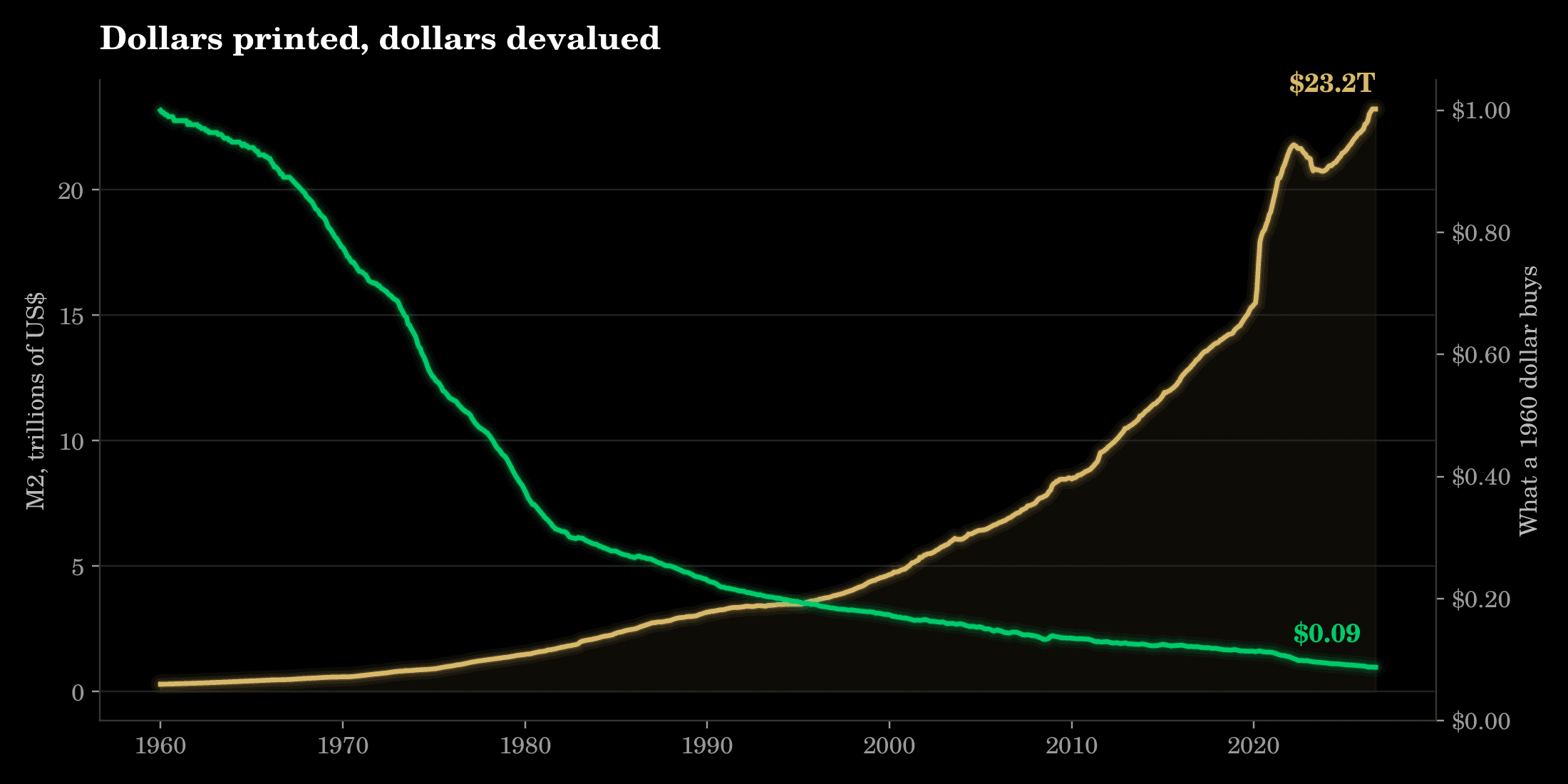
A dollar saved in 1960 buys less than a tenth of what it bought then. Nothing happened to the dollar's design: that is the design. A currency whose supply has no ceiling transfers value, every year, from the people who hold it to the people who receive the new money first.
1.1Dilution by design
The broad US money supply, M2, was about $300 billion in 1960. It is over $23 trillion today. Between January 2020 and mid-2022 alone it grew by more than 40%. Prices followed with a delay, as they always do: the Consumer Price Index has multiplied more than elevenfold since 1960.
This is not a failure that a better central bank will fix. Monetary expansion is how modern states finance themselves, and every holder of the currency pays for it through a loss of purchasing power that never appears on a bill.
1.2Stablecoins: fiat, onchain
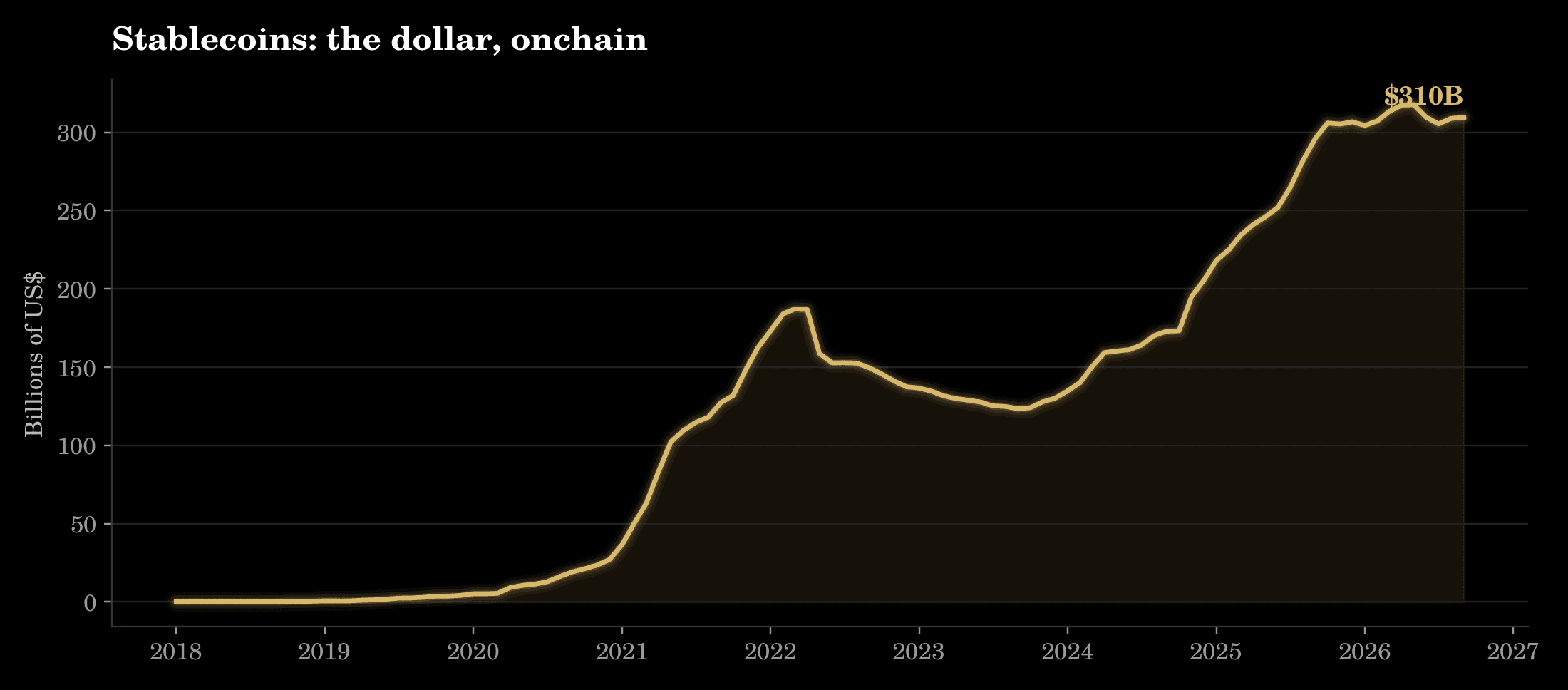
Stablecoins are expected to become one of the dominant forces in crypto, driven by governments and private companies alike. Their supply passed $300 billion in 2026. Yet what they extend is not a new monetary order, but the digital continuation of the old one. They preserve the language of stability while normalizing the same monetary logic that defines fiat itself: endless issuance, managed confidence and the steady erosion of purchasing power.
A stablecoin is stable only against the thing that is losing value. Holding one onchain is holding a dollar with better plumbing. TurboUSD was created inside this contradiction, not to hide it, but to expose it and build around it.
1.3A flooded market that leaves the community behind
At the other end of crypto, thousands of tokens launch every day. Many arrive already priced for insiders, their communities treated as exit liquidity, their economics built for a few weeks of attention. Builders with real ideas struggle to cut through the noise while shallow projects absorb capital and disappear.
₸USD was designed against both failures: against a currency that dilutes its holders, and against a token that extracts from its community. That is why it launched fairly, why nothing in its design pays the founder, and why every mechanism described in this paper points value back to the people who hold it.
02. ₸USD, the unstablecoin
An unstablecoin is the opposite of a stablecoin on every axis that matters. It has a finite supply instead of an elastic one, no peg instead of a target price, and it is priced in what appreciates instead of in what is being diluted.
| Stablecoin | ₸USD | |
|---|---|---|
| Supply | Grows with demand, no ceiling | 100B maximum, only shrinks |
| Issuer | A company that can mint and freeze | None: no mint, no freeze, no pause |
| Price | Pegged to the dollar | No peg, set by the market |
| Quoted against | Dollars | ETH, tokenized stocks and metals |
| Long-term purchasing power | Falls with the dollar | Designed to rise against it |
2.1What ₸USD is, and what it is not
₸USD is an ERC-20 token on Base, Coinbase's Ethereum layer 2, at 0x3d5e487B21E0569048c4D1A60E98C36e1B09DB07. It is not backed and cannot be redeemed for anything. It does not promise a price. Its value comes from three things only: a supply that can only go down, the assets it is priced against, and the demand of the people who hold and use it.
2.2Origin: the first unstablecoin
TurboUSD was deployed on 12 October 2024 through Mint.Club on Base, launched at $1, as the world's first unstablecoin. The deployment transaction is public and permanent, and it is the basis of the claim: see it on Basescan.
On 5 July 2025 the project relaunched as a fair launch through Clanker with a 100 billion supply. The token and its ₸USD/WETH liquidity position were created in the same transaction, and the position was renounced there and then: the liquidity cannot be pulled by anyone. In November 2025 TurboUSD reached Champagne Clanker, the platform's highest tier.
| Mint.Club (2024) | Clanker (2025, current) | |
|---|---|---|
| Date | 12 Oct 2024 | 5 Jul 2025 |
| Launch | Launched at $1 | Fair launch, no presale |
| Supply | 1,000,000 | 100,000,000,000 maximum |
| Liquidity | LP burned | LP position renounced at creation |
| Status | Kept for provenance | The ₸USD in circulation today |
2.3The unstable meta
Since ₸USD, other projects have adopted the unstablecoin idea. TurboUSD treats that as proof of the thesis rather than competition, and keeps a neutral record of the sector at unstablecoins.org, where projects are listed in the order they were deployed onchain.
03. The Anchor
What a currency is quoted against decides what it is worth. Stablecoins are paper priced in paper. ₸USD is priced in the hard assets that the printer keeps repricing upward.
3.1What the Anchor is
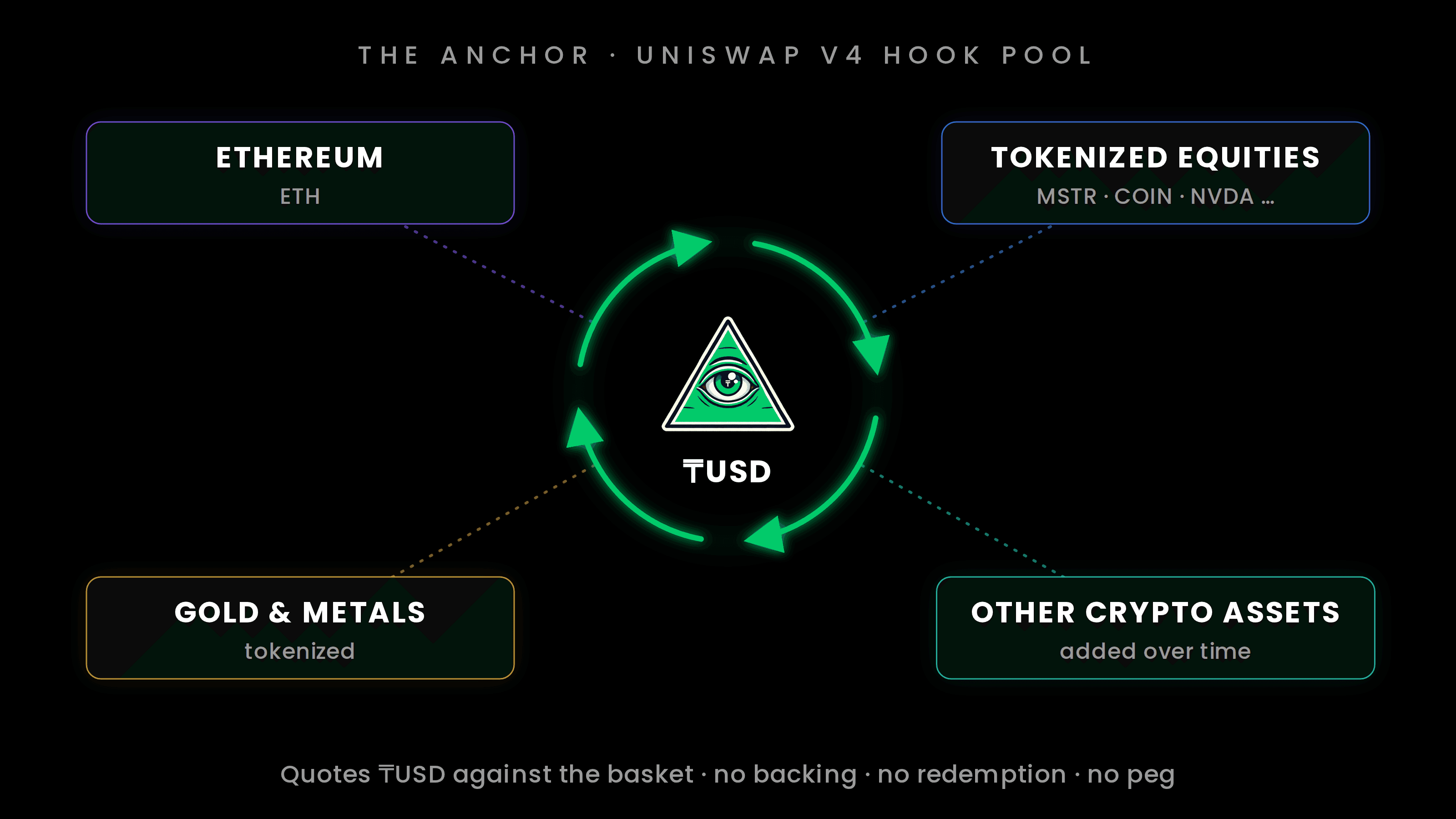
The Anchor is a liquidity pool, launched on 19 September 2026, built on a Uniswap V4 hook. Instead of quoting ₸USD against a single asset, it quotes ₸USD against a basket. Every trade through it prices ₸USD in that basket, never in dollars.
Until the Anchor, ₸USD was quoted mainly against ETH through its ₸USD/WETH pool, which remains live and renounced. The Anchor widens the same idea from one hard asset to several.
3.2The basket
- Ethereum. The main pair ₸USD has always been quoted in, and the base layer of the onchain economy.
- Tokenized equities. Companies the printer keeps repricing upward, issued onchain: MSTR, COIN, NVDA and other blue chips as they become available on Base and Robinhood Chain.
- Tokenized gold and metals. The original hard assets, whose supply grows around 1% a year against a money supply that grows several times faster.
- Other crypto assets. Onchain tokens the pool can add over time. When they rise, what ₸USD is priced in rises with them.
The weight of each class is set by the liquidity in the pool and will be published on the site as it is measured. Strategic tokens held by the treasury (section 8) are a different instrument; they would become part of the Anchor only if they are added to the pool's basket.
3.3What the Anchor is not
3.4Why it works
When dollars are printed, they do not reprice everything equally. They flow first into assets with scarce supply or real earnings: Ethereum, the largest listed companies, gold. Since January 2020, the dollar has lost over a fifth of its purchasing power while those assets multiplied in dollar terms.
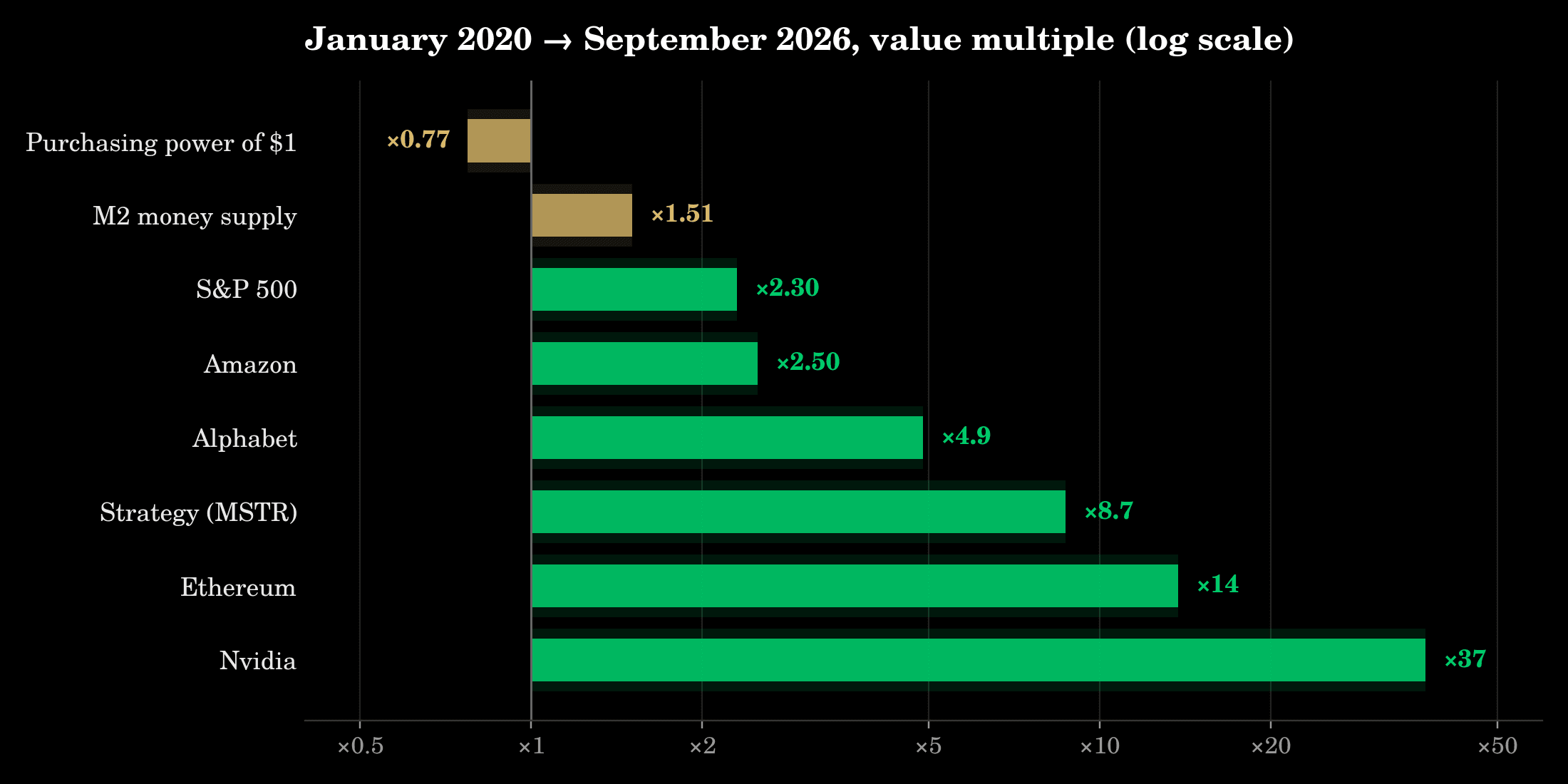
A token quoted against those assets lives on the inside of that repricing. Combine that with a supply that only shrinks, and the result is the thesis in one line: ₸USD looks like a dollar and appreciates like a hard asset.
04. Tokenized stocks & the tokenization wave
Stocks, metals and funds are moving onchain, and in September 2026 regulators started writing the rules for it. ₸USD was built for this moment.
4.1The rules arrive
| Date | Milestone |
|---|---|
| 17 Sep 2026 | The SEC's innovation exemption lets onchain venues trade tokenized stocks, including through AMMs and liquidity pools. Source |
| 18 Sep 2026 | The CFTC sends its crypto rules to the White House for review. Source |
| 19 Sep 2026 | The ₸USD Anchor pool launches, quoting ₸USD against ETH, tokenized stocks and metals. |
For the first time, a tokenized share of a listed company can sit in the same kind of pool, and be traded by the same kind of smart contract, as any other token. That is what makes the Anchor possible.
4.2Hard assets and paper assets
Not every tokenized asset protects against dilution. A tokenized bond or a tokenized money-market fund is still paper: a claim on dollars, with the dollar's weakness built in. ₸USD is only quoted against the tokenized assets that reprice upward as money is printed: equities with real earnings, metals, and Ethereum.
4.3Where ₸USD stands
- Priced in tokenized assets. The Anchor quotes ₸USD against ETH, tokenized stocks and tokenized metals. The more of the economy goes onchain, the wider that basket can get.
- A treasury run by smart contracts. The Treasury Manager is capped by code: per-action and daily limits, a cooldown, a TWAP check, and no way to sell ₸USD (section 8).
- An AI agent onchain. AMI decides and executes every treasury action on Base, and is registered as an AI agent under ERC-8004 (section 7).
4.4Base today, Robinhood Chain next
₸USD lives on Base. A deployment on Robinhood Chain, where a growing share of tokenized stocks is issued, is planned, together with a bridge so the same ₸USD can move between both networks. The contract address will be published on turbousd.com once it is deployed; until then, any ₸USD claiming to live on Robinhood Chain is not ours.
05. Tokenomics & supply
One number can never go up: 100,000,000,000. Everything else in the design pushes the supply in circulation down.
5.1The guarantees
| Guarantee | What it means | Proof |
|---|---|---|
| Max supply fixed | No mint function. The supply can only go down. | Contract |
| Admin: profile and fees only | The Clanker admin can only update the token's profile and the creator-fee recipient (today, the BurnEngine). No mint, no upgrade path, no pause switch. It can be renounced. | Contract |
| Liquidity locked | The ₸USD/WETH position was renounced in the transaction that created the token. It cannot be pulled. | Launch tx |
| Treasury: buybacks only | No ₸USD, WETH, USDC or strategic token can be taken out. They only end up in buybacks, locked or burned. | Code |
| No peg | Priced against ETH, tokenized stocks and hard assets. Never against a dollar. | The Anchor |
5.2Burns
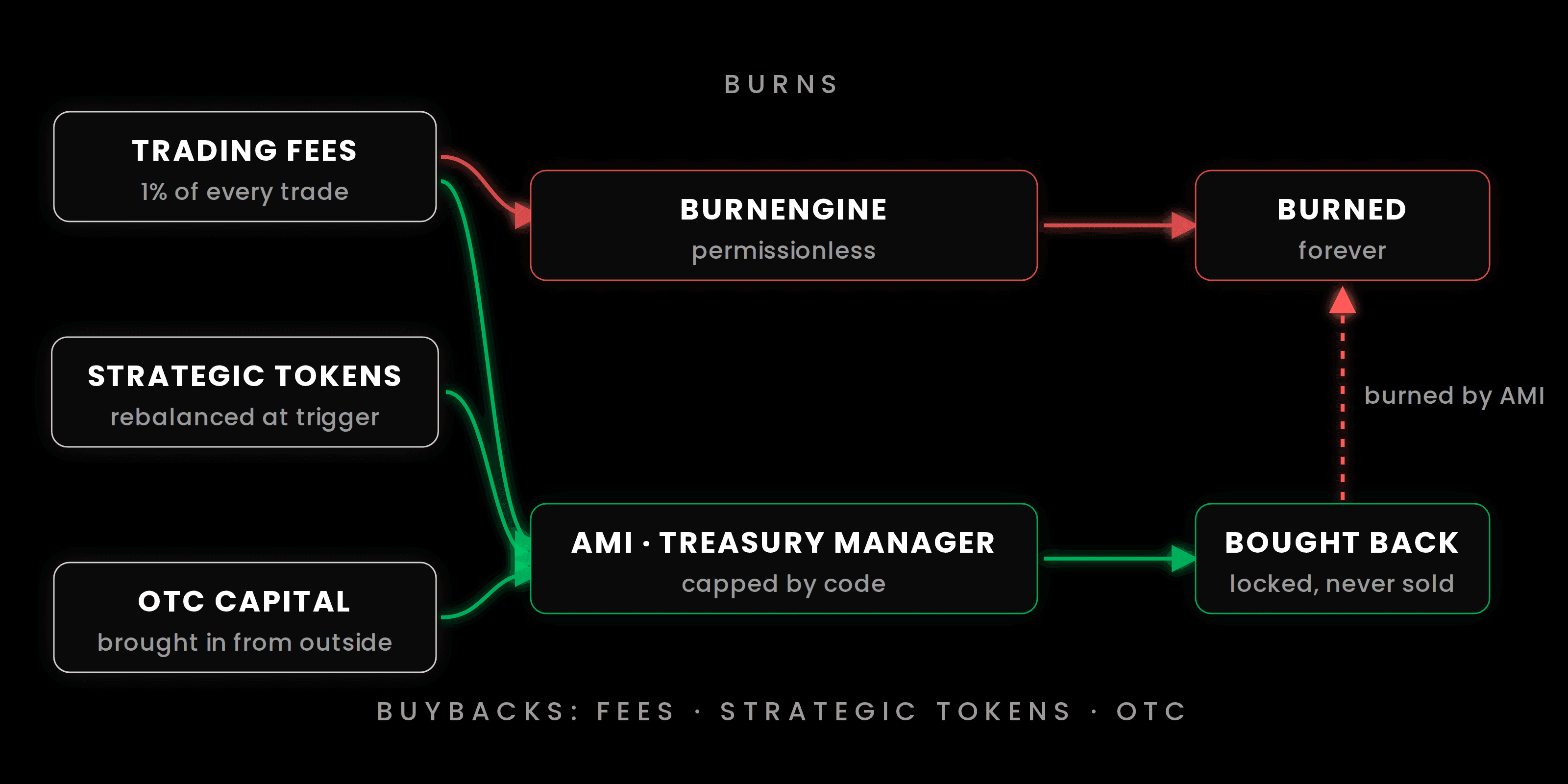
A burn sends ₸USD to an address nobody controls, removing it from the supply forever. ₸USD is burned in two ways:
- The BurnEngine (
0x0226…63AB), live since 17 March 2026. Every trade in the main pool pays a 1% fee. The BurnEngine claims the creator share of those fees, plus legacy fees collected before it existed, converts them into ₸USD and burns it. Anyone can trigger it; nobody can redirect it. - Treasury burns by AMI. AMI can burn ₸USD held by the treasury, within the limits of the Treasury Manager.
Together with the 900 million ₸USD burned by Clanker in October 2025, about 1.05 billion ₸USD had been burned by 21 September 2026.
5.3Buybacks
A buyback takes ₸USD off the market without burning it immediately. AMI buys ₸USD with the treasury's own funds: trading fees, the proceeds of strategic tokens that hit their trigger (section 8), and OTC purchases made with capital brought in from outside. What it buys is locked in the treasury for good. It can never be sold; it only ever leaves to be staked or burned.
The largest buyback so far was paid by the founder. At the Clanker launch, 2 billion ₸USD were set aside for the team. The founder bought the other members' share OTC, paying them from his own pocket, and when the allocation unlocked on 20 April 2026 he donated the full 2 billion to the Treasury Manager instead of selling it. It can only be burned.
5.4Where the supply is
| Bucket | Amount | Share |
|---|---|---|
| Maximum supply | 100,000,000,000 | 100.0% |
| Burned | 1,050,000,000 | 1.1% |
| Staked (locked pools and TurboFaith) | 28,600,000,000 | 28.6% |
| Treasury (founder donation, burn-only) | 2,000,000,000 | 2.0% |
| Holders | 247,850 wallets |
Most wallets come from an airdrop that put ₸USD in front of people who had never seen it, so they would look into it. The number that matters is not how many wallets exist but how much of the supply is off the market: burned, bought back or staked.
06. The flywheel
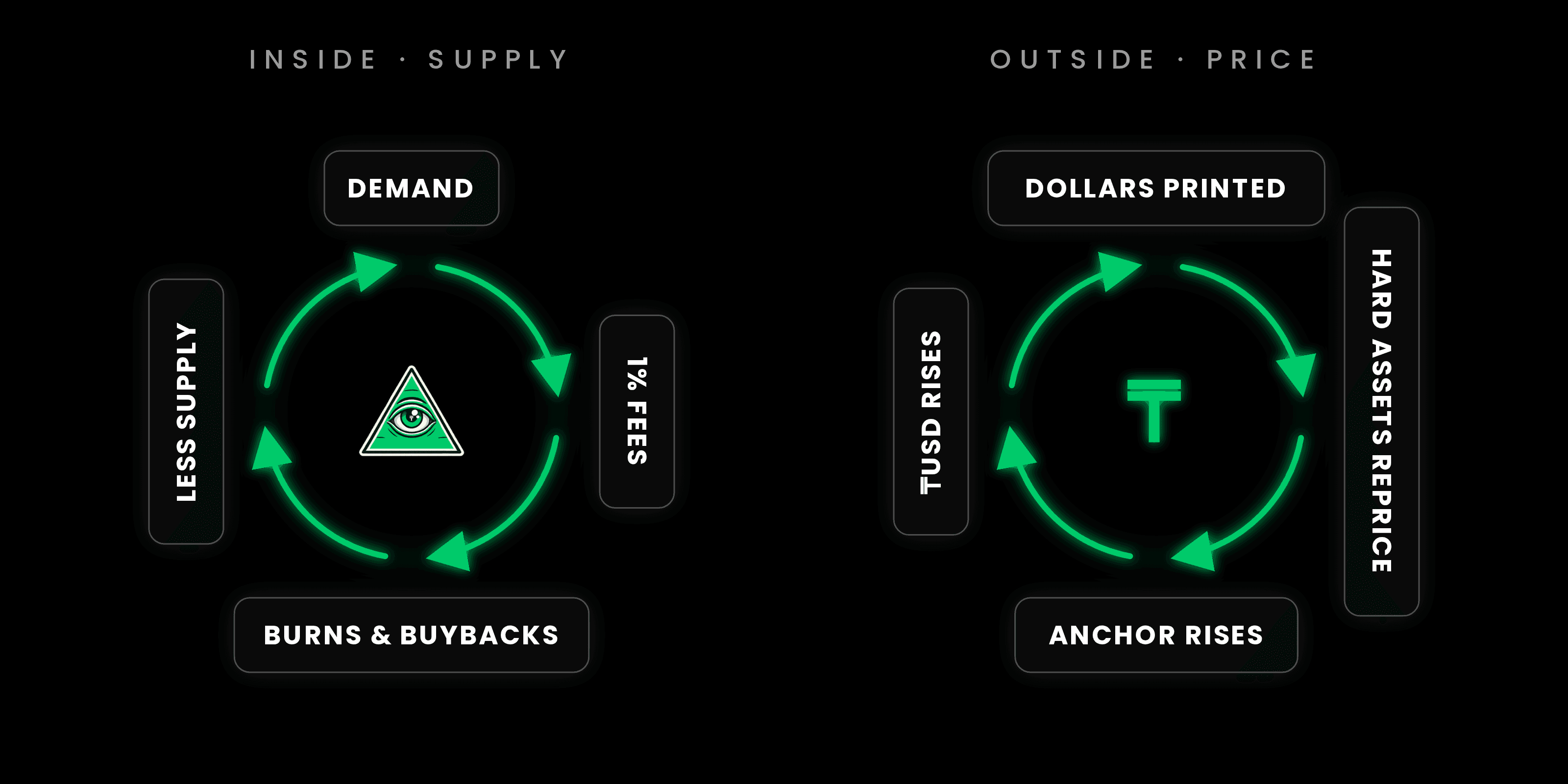
₸USD has two faces that push in the same direction. One works inside the token, on its supply. The other works outside, on what it is priced in.
6.1Inside: activity becomes scarcity
- Demand for ₸USD creates trading volume.
- Every trade pays a 1% fee, in WETH and ₸USD.
- The BurnEngine turns fees into burned ₸USD.
- AMI turns the treasury into buybacks and locks.
- Less ₸USD is left on the market, so the same demand meets a smaller supply.
6.2Outside: printing becomes price
- Dollars keep being printed.
- Hard assets reprice upward: ETH, tokenized stocks, metals.
- ₸USD is quoted against them through the Anchor, so its price moves with them.
- A higher price brings attention, and attention brings demand back to the inside face.
Neither face needs the other to work, and each feeds the other. That is the design: a supply that only shrinks, living inside the assets that the printer makes more expensive.
07. AMI 9000: Artificial Monetary Intelligence
Central banks decide in closed rooms and answer to nobody onchain. AMI decides in public, inside limits it cannot change, and every action it takes is a transaction anyone can read.
7.1The anti-Fed
| Federal Reserve | AMI | |
|---|---|---|
| Mandate | Stable prices, full employment | Less ₸USD in circulation, a stronger treasury |
| Main tool | Creating money | Removing money: buybacks, burns, locks |
| Transparency | Minutes weeks later | Every action onchain, in real time |
| Limits | Set by itself | Written in a contract it cannot change |
| Can it print? | Yes | No. There is no mint function. |
7.2From experiment to agent
| Date | Milestone |
|---|---|
| 16 Mar 2026 | The Unstable Chair, AMI's first public role, launches. |
| 18 Mar 2026 | First onchain buyback and burn executed by the agent. |
| 5 Apr 2026 | AMI v2: persistent memory and a stronger reasoning model. |
| 6 Apr 2026 | First strategic token purchases. |
| 12 Apr 2026 | AMI 9000 is registered as an AI agent under ERC-8004, on Ethereum and Base. |
7.3Architecture
AMI is built in six layers, from what it sees to what it remembers. Intelligence and control never sit in the same layer: AMI may decide what should be done, but the Treasury Manager contract defines what can be done.
| Layer | What it does |
|---|---|
| 1 · External observation | Reads the macro context: Fed decisions, M2, inflation, the price of ETH and of the Anchor assets. |
| 2 · Internal observation | Reads ₸USD itself: price, volume, liquidity, supply, staking, treasury balances. |
| 3 · Decision engine | Weighs the signals against its objectives, caps and policy rules. Holding is always a valid answer. |
| 4 · Execution | Sends the chosen action to the Treasury Manager, which checks every limit before anything moves. |
| 5 · Transparency | Explains each decision in public and answers questions through its Telegram bot. |
| 6 · Memory | Keeps a persistent record of past decisions and outcomes, and learns from them. |
7.4A decision in practice
On 18 March 2026 the Federal Reserve held rates. AMI read the decision, weighed it against ₸USD's own market, and planned a buyback of 0.25 WETH. The Treasury Manager's per-action limit capped it at 0.05 WETH, and that is what was executed. The agent proposed; the contract disposed. The full log of operations, each with its transaction, is public at treasury.turbousd.com.
08. Treasury Manager & strategic tokens
The treasury is what AMI works with. It holds WETH, USDC, strategic tokens and locked ₸USD. It is not a reserve, and none of it backs ₸USD: it exists to be spent on buybacks, burns and locks.
8.1The contract
The Treasury Manager (0xAF8b…4107) is the only way AMI can touch the treasury. It exposes a short list of functions, each with its own limits, and leaves out everything that could drain it.
| Function | What it does | Limit |
|---|---|---|
buybackWETH | Buys ₸USD with WETH | 0.5 ETH per action, 2 ETH per day |
buybackUSDC | Buys ₸USD with USDC | 1,000 USDC per action, 5,000 per day |
burnTUSD | Burns treasury ₸USD | 100M per action, 500M per day |
stakeTUSD | Stakes treasury ₸USD | 100M per action, 500M per day |
buyStrategicToken | Buys an approved strategic token | Per-action and daily caps |
rebalanceStrategicToken | Sells a strategic token that hit its trigger: 75% into ₸USD, 25% into USDC | Per-action and daily caps |
8.2Constraints and safety
- Cooldown. At least 60 minutes between two operator actions.
- Price checks. Every swap is checked against a time-weighted average price: 30 minutes on liquid pools, 2 hours on the ₸USD pool, so a manipulated price cannot trigger an action.
- Roles. An owner and an operator, with two-step ownership transfer. The owner is kept for safety for now and can be renounced later.
- Permissionless fallback. After an initial 180-day period, if both owner and operator stay inactive for 14 days, anyone can execute the treasury's functions within the same limits.
- Audits. Two audit rounds, on the v2 and v3 contracts. The code is public on GitHub.
8.3Strategic tokens: buyback triggers
Strategic tokens are other tokens AMI buys for the treasury, chosen from the Base ecosystem. They are not a portfolio and not a reserve: each one is a trigger. When a strategic token rises past its target, AMI rebalances it, and 75% of the proceeds become a direct ₸USD buyback. The rest goes to USDC for future buybacks.
In September 2026 the registry held DRB, BNKR, KELLY and CLAWD. The live registry, with each token's position and trigger, is on treasury.turbousd.com.
09. Staking
Staking is supply policy, not yield farming. Rewards are paid in existing ₸USD from the treasury, never in a token printed to pay them, and every ₸USD staked is ₸USD off the market. About 28.6 billion ₸USD were staked on 21 September 2026.
9.1Locked pools
Locked pools (0x2a70…C89A, through team.finance) pay around 15% a year in ₸USD in exchange for a fixed lock. Pools 1 to 3 have ended; the current pools unlock between 2026 and 2030. Fort Turbo holds 1.5 billion ₸USD locked until 1 January 2030.
9.2TurboFaith
TurboFaith (0x2958…21bc), live since 14 July 2026, is liquid staking: no lock, withdraw at any time. While ₸USD is staked it accrues ₸FAITH, a loyalty score (1,000 ₸USD staked for a day earns 1 ₸FAITH). ₸FAITH is not a token and cannot be traded; it measures conviction.
10. Ecosystem: demand engines
A currency needs things to be used for. TurboUSD builds, and helps others build, projects that run on ₸USD. Each one is launched separately, with its own site, and each one creates demand for ₸USD, burns it, or keeps it off the market.
- LaunchingMemeStock.marketThe stock market replayed: historic IPOs relaunched as memestocks, entered with ₸USD.
- Real worldTurboX EnergyThe first onchain energy drink, with the ₸USD contract on the can.
- DeviceTurbo NodeA desk terminal for price, burns and the debt clock.
- MerchStoreApparel and objects, paid in ₸USD, ETH or USDC.
10.1MemeStock.market
MemeStock.market replays the stock market onchain. Historic IPOs, starting with Pfizer in 1942, are relaunched in chronological order as memestocks through Initial Memestock Offerings (IMOs), on a clock driven by Ethereum blocks. Twenty-seven memestocks are planned for the first cycle.
- ₸USD is the entry ticket. IMOs are entered with ₸USD, and every memestock pool is paired 50% ₸USD and 50% the company's own tokenized stock.
- Fees burn ₸USD. Each trade pays 1%: 0.2% burns ₸USD, 0.2% burns the tokenized stock, 0.3% goes to brokers and 0.3% to a ₸USD staking pool.
- ₸USD is locked to take part. Brokers bond ₸USD to operate, and the trading terminal is reserved for ₸USD holders.
10.2Real-world products
TurboX Energy is the first onchain energy drink: Edition #1 is 5,000 silkscreened cans with the ₸USD contract printed on them, handed out in 16 places around the world. Products are issued by TurboAssets LLC, a Wyoming company registered on 3 August 2025.
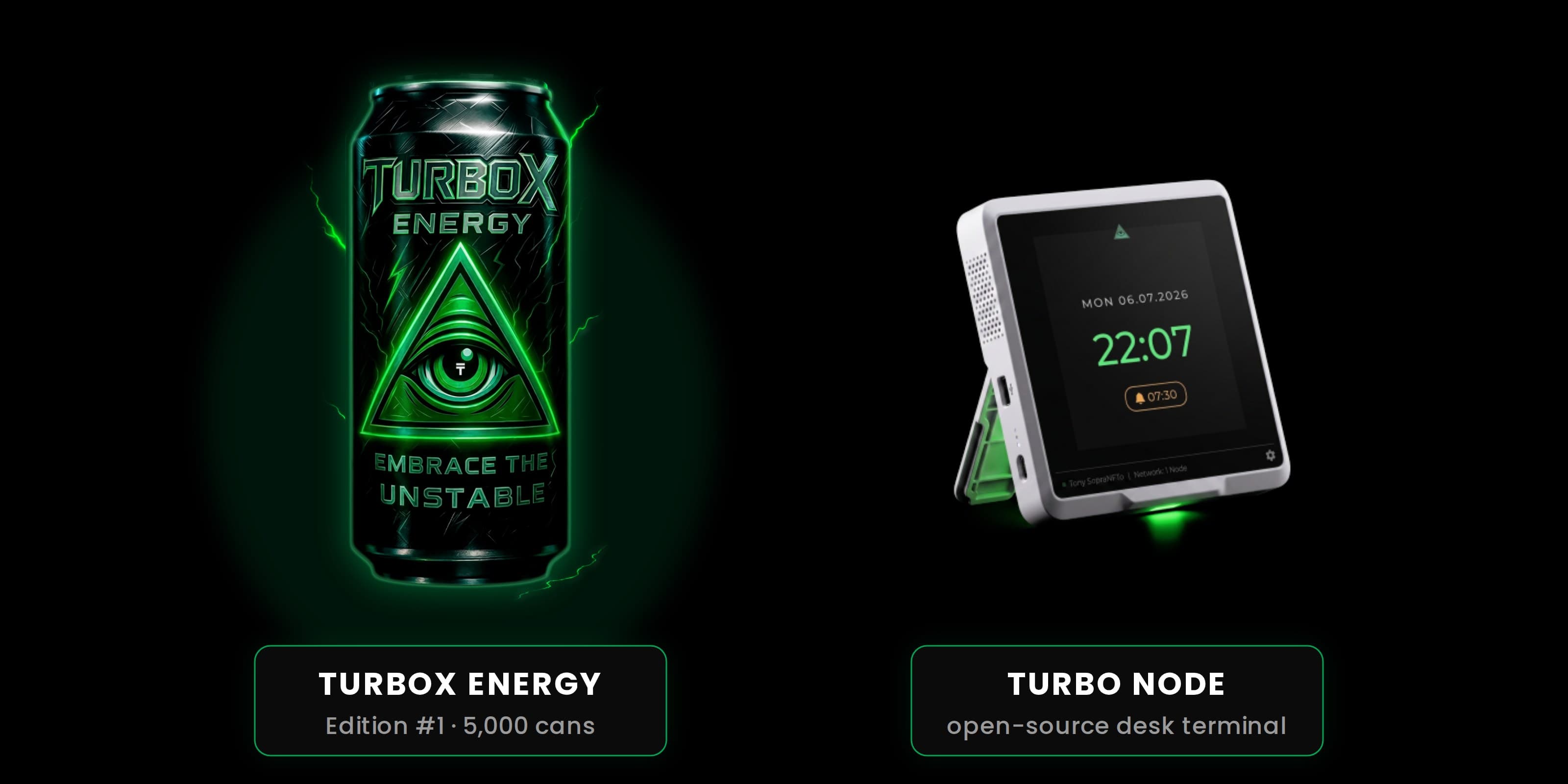
The Turbo Node is an open-source IoT desk terminal that shows ₸USD's price, its burns and the US debt clock, tracks a watchlist and displays NFTs. Nodes on the ₸USD Network take part in hourly rewards in existing ₸USD; for now those rewards are symbolic and nothing is ever minted for them. The Store sells apparel and objects paid in ₸USD, ETH or USDC on Base.
10.3Tools and community infrastructure
- treasury.turbousd.com: the live treasury, every AMI operation with its transaction.
- unstablecoins.org: the neutral screener of the unstablecoin sector.
- Telegram bots: AMI, live stats, the meme bot, and staking and burn monitors.
- The meme database: hundreds of ₸USD memes, free to download and share.
10.4How each engine feeds ₸USD
| Project | Needs ₸USD | Burns ₸USD | Locks ₸USD |
|---|---|---|---|
| MemeStock.market | Yes: IMOs, pools | Yes: 0.2% of every trade | Yes: broker bonds, staking pool |
| Store | Accepted as payment | No | No |
| TurboX Energy | Brand and awareness | No | No |
| Turbo Node | Rewards paid in ₸USD | No | No |
| Main pool trading | Yes | Yes: via the BurnEngine | No |
11. Brand & the Cult of Chaos
Most tokens exist only on a chart. When attention moves, nothing is left. TurboUSD was built to exist beyond the chart, because a currency is a shared belief before it is anything else.
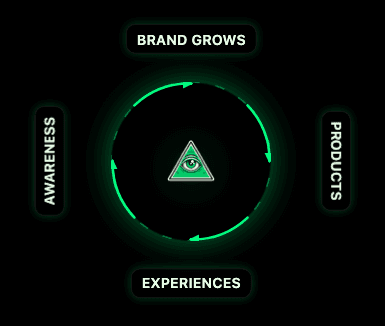
11.1From narrative to objects
The real-world layer is not ornamental; it is structural. A can, a shirt or a device on a desk turns an abstract token into something people can hold, give and talk about. Each object carries the same message and the same contract address, and each one is a persistence mechanism: it keeps ₸USD present when the market looks elsewhere.
11.2The Cult of Chaos
The community calls itself the Cult of Chaos. Holders become participants through eleven ranks, weekly raids and level-up rewards, and the manifesto sets its principles: reject stability sold as safety, verify instead of trusting, and hold what cannot be printed.
11.3Symbols
The ₸ sign (Unicode U+20B8), neon green on black, the eye and the monolith. The references are deliberate: 1984, The Matrix, Fight Club, stories about seeing through a system that presents itself as the only possible one. The full brand kit is free to use.
12. Risks & legal disclosure
₸USD is an experimental digital asset. Anyone holding it can lose all of its value. The main risks are these:
- Market risk. ₸USD has no peg and no floor. Its price can fall sharply and liquidity can be thin.
- Smart-contract risk. The token, the pools, the BurnEngine, the Treasury Manager and the staking contracts are software. Audits reduce risk; they do not remove it.
- AI-agent risk. AMI can make poor decisions. Its limits are enforced by the Treasury Manager, which bounds the damage but cannot guarantee good outcomes.
- Third-party assets. Tokenized stocks and metals in the Anchor are issued by third parties, with their own custody, legal and redemption risks. ₸USD has no claim on them.
- Regulatory risk. Rules for tokenized assets and digital currencies are changing quickly and differ between countries.
- Multichain risk. Bridges and deployments on other networks add their own technical risks.
13. Appendix: contracts & timeline
13.1Contract register (Base)
| Contract | Address |
|---|---|
| ₸USD token | 0x3d5e487B21E0569048c4D1A60E98C36e1B09DB07 |
| ₸USD/WETH pool (Uniswap V3) | 0xd013725b904e76394A3aB0334Da306C505D778F8 |
| Anchor pool and hook (Uniswap V4) | Published on turbousd.com |
| BurnEngine | 0x022688aDcDc24c648F4efBa76e42CD16BD0863AB |
| Legacy fee claimer | 0x2c857A891338fe17D86651B7B78C59c96e274246 |
| Treasury Manager | 0xAF8b3FEBA3411430FAc757968Ac1c9FB25b84107 |
| Locked staking | 0x2a70a42BC0524aBCA9Bff59a51E7aAdB575DC89A |
| TurboFaith liquid staking | 0x2958489b3132f0c9B04d499C21017a8289B021bc |
| Robinhood Chain deployment | Planned |
13.2Timeline
| Date | Event |
|---|---|
| 12 Oct 2024 | ₸USD deployed through Mint.Club: the first unstablecoin. |
| 5 Jul 2025 | Fair relaunch through Clanker, 100B supply, liquidity position renounced. |
| 3 Aug 2025 | TurboAssets LLC registered in Wyoming. |
| 23 Oct 2025 | 900M ₸USD burned by Clanker. |
| 17 Nov 2025 | Champagne Clanker, the platform's highest tier. |
| 16 Mar 2026 | AMI's Unstable Chair launches. |
| 17 Mar 2026 | BurnEngine live: ₸USD becomes deflationary. |
| 18 Mar 2026 | First buyback and burn executed by AMI. |
| 12 Apr 2026 | AMI 9000 registered under ERC-8004. |
| 20 Apr 2026 | Founder donates 2B ₸USD to the Treasury Manager. |
| 14 Jul 2026 | TurboFaith liquid staking goes live. |
| 19 Sep 2026 | The Anchor pool launches. |
| Sep 2026 | MemeStock.market launching. |
Data sources used in this paper: FRED (M2, CPI, ETH), Yahoo Finance (equities), DefiLlama (stablecoin supply), Basescan and treasury.turbousd.com (onchain data).
Terminology
A
- AMI (Artificial Monetary Intelligence)
- The autonomous onchain agent that runs ₸USD's treasury policy inside the limits of the Treasury Manager: the anti-Fed. See §07 AMI 9000.
- AMI 9000
- AMI's current identity, registered as an AI agent under ERC-8004 on Ethereum and Base. See §07 AMI 9000.
- Anchor
- The basket ₸USD is quoted against: Ethereum, tokenized equities, tokenized metals and other crypto assets. It prices ₸USD; it does not back it. See §03 The Anchor.
- Anchor pool
- The Uniswap V4 hook pool, launched on 19 September 2026, that quotes ₸USD against the Anchor basket. See §03 The Anchor.
B
- Base
- Coinbase's Ethereum layer 2, where ₸USD lives.
- Burn
- Sending ₸USD to an address nobody controls, reducing the supply forever. Funded by trading fees through the BurnEngine, and by AMI from the treasury. See §05 Tokenomics & supply.
- BurnEngine
- The permissionless contract that claims trading fees, converts them into ₸USD and burns it. See §05 Tokenomics & supply.
- Buyback
- AMI buying ₸USD off the market with fees, strategic-token proceeds or OTC capital. Bought ₸USD stays locked in the treasury and ends up burned. See §05 Tokenomics & supply.
C
- Clanker
- The Base launchpad used for ₸USD's fair relaunch on 5 July 2025. ₸USD holds Champagne Clanker status.
- Cooldown
- The minimum 60 minutes the Treasury Manager enforces between two operator actions. See §08 Treasury.
- Cult of Chaos
- The ₸USD community and its ranking system: eleven ranks, raids and level-up rewards. See §11 Brand & culture.
D
- Debasement
- The loss of a currency's purchasing power through the expansion of its supply. See §01 The problem.
E
- ERC-8004
- The onchain identity standard for AI agents under which AMI 9000 is registered.
F
- Fair launch
- A launch with no presale or private round, where every buyer enters under the same conditions.
- Flywheel
- ₸USD's two-face loop. Inside: activity becomes burns, buybacks and less supply. Outside: printing reprices the Anchor, and ₸USD with it. See §06 The flywheel.
- Fort Turbo
- A locked staking pool holding 1.5 billion ₸USD until 1 January 2030. See §09 Staking.
H
- Hard asset
- An asset whose supply grows slowly or not at all, or that has real earnings, so it reprices upward as money is printed.
- Hook (Uniswap V4)
- Custom logic attached to a Uniswap V4 pool. The Anchor uses one to quote ₸USD against a basket. See §03 The Anchor.
I
- IMO (Initial Memestock Offering)
- MemeStock.market's launch event for a memestock, entered with ₸USD. See §10 Ecosystem.
M
- M2
- The broad US money supply: cash, deposits and near-money. The measure of dollar printing used in this paper. See §01 The problem.
- Memestock
- A MemeStock.market memecoin named after a historic IPO, paired 50/50 with ₸USD and the company's tokenized stock. It is not a share. See §10 Ecosystem.
N
- No peg
- ₸USD targets no price and is never quoted against a dollar.
O
- OTC buyback
- ₸USD bought outside the market with outside capital and given to the treasury, such as the founder's 2 billion donation. See §05 Tokenomics & supply.
R
- Renounced
- Rights permanently given up. The ₸USD/WETH liquidity position was renounced in the transaction that created it.
- Robinhood Chain
- Robinhood's layer 2, where a ₸USD deployment and bridge are planned. See §04 Tokenized stocks.
S
- Stablecoin
- A token pegged to a fiat currency, usually the dollar, with a supply that grows with demand. See §01 The problem.
- Strategic tokens
- Tokens AMI buys for the treasury as buyback triggers. When one rises past its target it is rebalanced: 75% into ₸USD, 25% into USDC. See §08 Treasury.
T
- ₸FAITH
- A non-transferable loyalty score: 1,000 ₸USD staked for one day earns 1 ₸FAITH. It is not a token. See §09 Staking.
- ₸USD
- TurboUSD, the first unstablecoin. The ₸ sign is Unicode U+20B8.
- Tokenization wave
- The move of stocks, metals and funds onchain, accelerated by the SEC and CFTC actions of September 2026. See §04 Tokenized stocks.
- Tokenized stock
- An onchain token that tracks a listed company's share, issued by a third party. See §04 Tokenized stocks.
- Treasury
- The WETH, USDC, strategic tokens and locked ₸USD that AMI works with. It is not a reserve and does not back ₸USD. See §08 Treasury.
- Treasury Manager
- The capped contract AMI operates through. It has no function to sell ₸USD or withdraw funds. See §08 Treasury.
- Turbo Node
- An open-source IoT desk terminal on the ₸USD Network that shows price, burns and the debt clock. Its hourly ₸USD rewards are symbolic for now. See §10 Ecosystem.
- TurboFaith
- Liquid ₸USD staking with no lock. It accrues ₸FAITH. See §09 Staking.
- TurboX Energy
- The first onchain energy drink, with the ₸USD contract printed on the can. See §10 Ecosystem.
- TWAP
- Time-weighted average price. The Treasury Manager checks swaps against 30 minutes on liquid pools and 2 hours on the ₸USD pool. See §08 Treasury.
U
- Unstable meta
- The narrative and market around unstablecoins that TurboUSD started. See §02 The unstablecoin.
- Unstablecoin
- A finite, deflationary, unpegged onchain currency priced in hard assets instead of fiat. ₸USD was the first, deployed on 12 October 2024. See §02 The unstablecoin.